
Why China’s Sudden Move In The Strait Of Hormuz Could Change The Entire Crisis
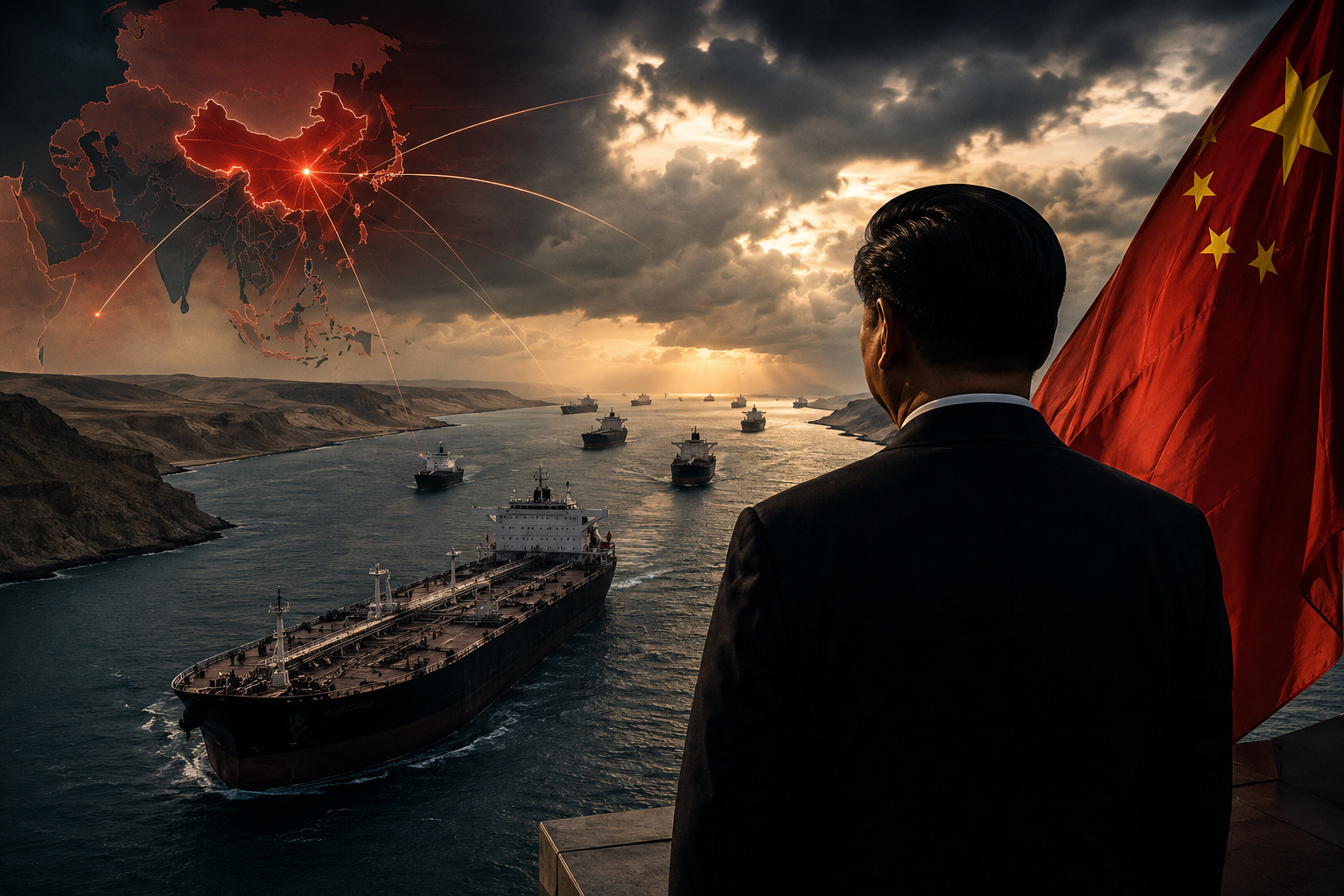
China’s Quiet Hormuz Intervention Just Changed The Global Energy Crisis
The New Power Broker In Hormuz Is Not Iran Or America—It Is China
The Strait of Hormuz has always been one of the most dangerous pressure points on Earth. Now it is becoming something even more serious: a test of Chinese global power.
For months, the crisis around Hormuz has largely been framed around Iran, American military pressure, energy disruption, and fears of escalation across the Middle East. But a new reality is emerging beneath the surface. China is no longer behaving like a distant observer. Beijing is increasingly acting like a central player with direct leverage over what happens next.
That matters because the Strait of Hormuz is not just another shipping route. Roughly one fifth of the world’s oil supply moves through it. Much of that energy flows directly toward Asian markets, especially China. The moment Hormuz becomes unstable, the consequences spread far beyond the Gulf.
And now there are growing signs that China may be moving from passive dependency toward active management.
The Detail That Suddenly Changed The Story
The most significant recent development was the reported movement of Chinese-linked vessels through Iranian-controlled “management protocols” in the Strait of Hormuz. Iranian-aligned reporting claimed Chinese ships were permitted through strategic corridors after diplomatic coordination between Beijing and Tehran.
That detail may sound technical. It is not.
It suggests China is no longer simply reacting to the crisis. It may now be negotiating operational access directly inside one of the world’s most dangerous maritime chokepoints.
The implication is enormous.
If certain states gain preferential movement through Hormuz while others remain exposed to disruption, delays, seizures, insurance chaos, or military escalation, then the Strait stops being merely an energy route. It becomes a geopolitical leverage machine.
That is exactly the kind of scenario global markets fear.
The Real Reason China Cannot Stay Neutral
China’s dependence on Hormuz is not theoretical.
Asian economies receive the overwhelming majority of crude oil flowing through the Strait, with China remaining one of the single most exposed countries. Parliamentary analysis published during the crisis noted that China and India together received roughly 44% of crude exports moving through the route in 2025.
Meanwhile, analysis surrounding the Iran conflict suggests China absorbs the overwhelming majority of Iranian oil exports under sanctions conditions.
That creates a difficult balancing act for Beijing.
China wants stable energy flows.
China wants strong ties with Iran.
China wants to avoid direct military confrontation with the United States.
China also wants to appear like a rising global stabilizing power capable of influencing international crises.
Those objectives increasingly collide inside Hormuz.
The deeper problem is that Beijing cannot fully detach itself from the crisis anymore. Its economy is too exposed.
The Hidden Power Shift Underneath The Crisis
For years, the United States dominated the security architecture surrounding major maritime trade routes. Hormuz was largely viewed through an American military lens.
That picture is changing.
China’s growing economic footprint across the Gulf, combined with its relationship with Iran, means Beijing now possesses something Washington does not fully control: direct economic leverage over Tehran.
Even American officials are now openly discussing China as a necessary player in reopening or stabilizing the Strait.
That alone marks a geopolitical shift.
The uncomfortable reality for Western governments is that China may now hold influence that becomes operationally useful during crises involving energy, shipping, sanctions, and Gulf diplomacy.
This is one reason the global balance of power increasingly revolves around infrastructure, trade routes, and strategic dependency. The old model of military dominance alone is becoming less stable.
The economic risk is bigger than most people realize.
The Hormuz crisis is not just about oil prices spiking for a few weeks.
It is about systemic fragility.
Global supply chains still rely on narrow maritime chokepoints that can destabilize inflation, manufacturing, shipping costs, food prices, and political stability within days. Around 20% of global petroleum trade passes through Hormuz.
That means every escalation creates ripple effects across the following:
Fuel costs
Shipping insurance
Industrial production
Aviation
Consumer prices
Financial markets
Political trust
The danger becomes even greater when major powers begin creating competing access arrangements or influence zones inside those trade routes.
That is why China’s involvement matters so much.
If Beijing becomes the state capable of negotiating partial operational stability with Iran while Western powers struggle militarily and diplomatically, then China gains something larger than oil security. It gains strategic prestige.
The Dangerous Question Hanging Over Everything
There is now an increasingly uncomfortable question underneath the entire crisis:
What happens if China becomes indispensable to resolving conflicts the West cannot fully control alone?
That question extends far beyond Hormuz.
It touches Taiwan.
Energy security.
Global shipping.
Semiconductors.
Sanctions systems.
Financial infrastructure.
Military deterrence.
Diplomatic influence.
The Hormuz crisis may ultimately be remembered less for temporary oil disruption and more for exposing how deeply interconnected global power has become.
Beijing appears to understand this clearly.
Its approach has been cautious, layered, and highly strategic. China has avoided becoming openly militarized in the conflict while simultaneously positioning itself as economically essential to stability.
That is a very different form of power projection than traditional Western interventionism.
And it may prove highly effective.
Why This Suddenly Feels Like A Preview Of The Future
The wider geopolitical picture emerging from Hormuz feels increasingly clear.
Future global crises may no longer revolve around simple military dominance. They may revolve around which countries control supply chains, trade corridors, energy flows, shipping access, semiconductor production, and economic dependencies.
That is partly why the modern geopolitical environment increasingly feels unstable, fragmented, and structurally fragile.
China understands that economic leverage can become geopolitical leverage remarkably quickly during crises.
Hormuz is demonstrating that in real time.
And the deeper anxiety underneath the story is simple:
If one narrow waterway can suddenly pull America, Iran, China, Gulf states, shipping companies, oil markets, and global inflation into the same pressure system, then the world economy may be far more vulnerable than most people realize.
That vulnerability is now impossible to ignore. The
