
The TV Chef Arrest Story Is Escalating Fast — And The Silence Around The Name Is Fueling Even More Questions
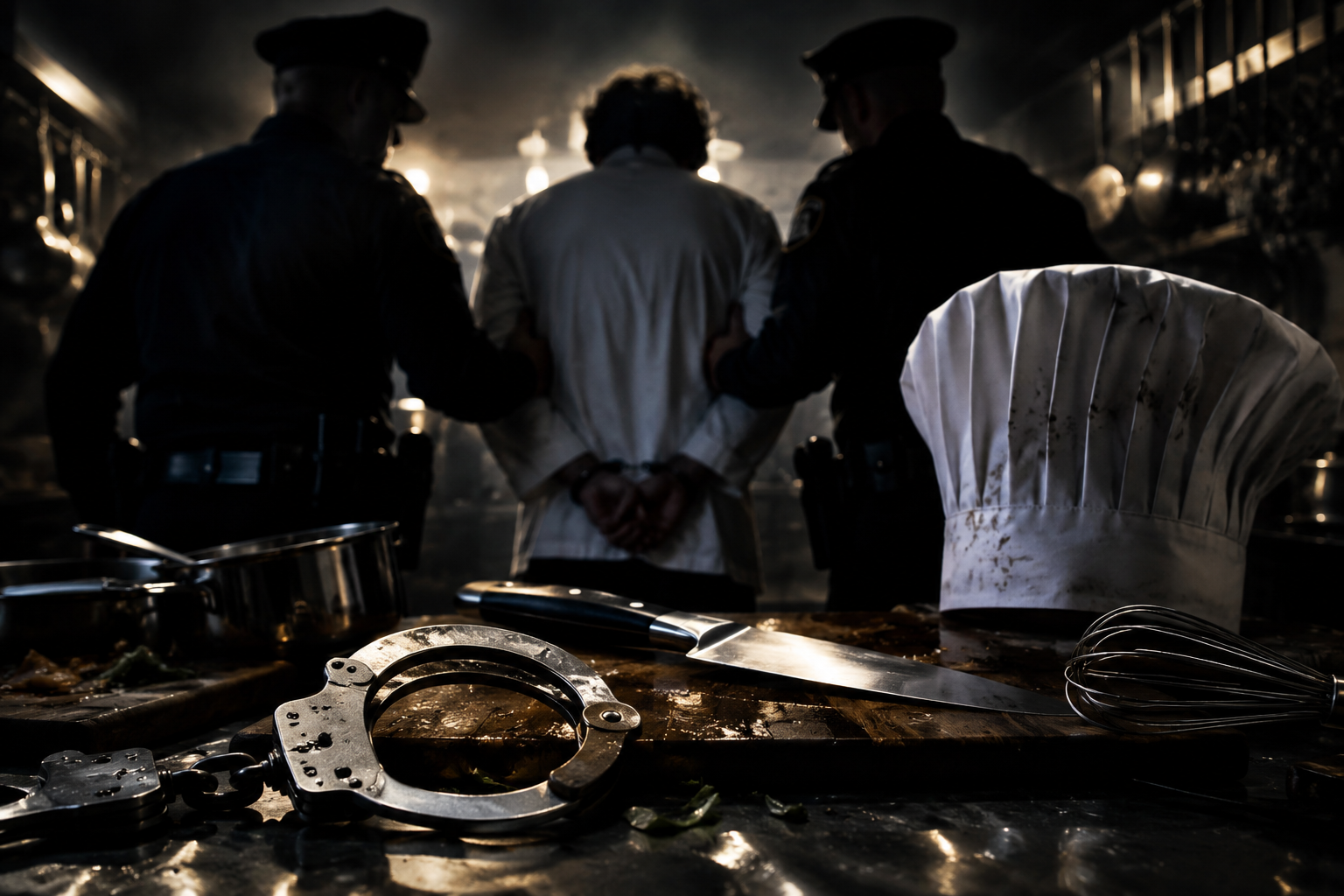
The Detail Making The TV Chef Arrest Story Feel Bigger By The Hour
Why The Unnamed TV Chef's Arrest Has Suddenly Become One Of Britain’s Most Tense Media Stories
The story surrounding the unnamed television chef arrested on suspicion of rape and sexual assault is no longer sitting quietly inside the crime pages. It is accelerating into something larger, stranger, and far more culturally explosive.
This is partly because of the allegations themselves. Partly because of the celebrity angle. But mostly because the public still does not know who the chef is.
That vacuum has created exactly the kind of tension modern media struggles to control. Rumors spread faster than facts. Innocent names begin circulating online. Entire fan communities start speculating. Television producers, PR teams, and broadcasters suddenly become nervous about every chef, presenter, or food personality currently on screen.
The confirmed facts remain limited but serious.
Police confirmed that a 30-year-old man was arrested on suspicion of rape, sexual assault, and causing a person to engage in sexual activity without consent following an alleged incident reported to have taken place in London in January. The man was later released on bail while inquiries continue.
That alone would already be a major story.
But the combination of celebrity culture, television fame, and anonymity has pushed the case into a different category entirely.
The silence around the name is becoming part of the story.
Most criminal investigations never become national obsessions.
This one has.
The problem is not that the public knows too much, but that the public knows too little.
The chef has not been publicly identified. Police have not released a name. No formal charges have been announced. Legally and ethically, that matters enormously.
But culturally, anonymity creates pressure.
People begin trying to solve the mystery themselves. Social media fills the gaps with speculation. Every television appearance by a young chef suddenly attracts suspicion. Every deleted post, missed appearance, or scheduling change becomes “evidence” to somebody online.
That creates collateral damage fast.
The longer the uncertainty continues, the more the story risks turning from a criminal investigation into a digital guessing game.
And that is precisely where modern celebrity scandals become dangerous.
The television industry knows how fast these stories can collapse careers.
Food television depends heavily on personality.
The audience is not just buying recipes. They are buying trust, warmth, familiarity, routine, and comfort.
That makes allegations involving television chefs uniquely destabilizing.
A politician can sometimes survive scandal through tribal loyalty. A controversial musician can survive through rebellion and edge. But celebrity chefs are usually sold as safe figures inside people’s homes.
That image can implode almost instantly.
The modern entertainment world already carries the scars of multiple high-profile reputation collapses across television, media, and celebrity culture. Britain has spent years watching public trust fracture around institutions and personalities once treated as untouchable.
The pressure behind these stories fits a broader pattern of public trust in institutions and familiar figures becoming increasingly unstable.
The television industry understands the risk immediately because brands, broadcasters, sponsors, production companies, publishers, and advertisers all begin calculating exposure the moment allegations appear.
Even without charges.
Even without a public name, it is still effective.
The Internet Is Turning The Story Into A Speculation Machine
The internet is where the story becomes bigger than one arrest.
The online environment rewards mystery, fear, and collective detective work. Algorithms amplify uncertainty because uncertainty drives engagement.
An unnamed celebrity case is almost perfectly designed for viral speculation.
Posts asking “Who is it?” spread rapidly. Users compare ages, appearances, schedules, television absences, and social media activity. Some accounts present pure guesswork as insider knowledge.
That creates a brutal paradox.
The unnamed individual remains legally protected while simultaneously becoming the center of massive, uncontrolled online speculation.
And because no official identity exists publicly, suspicion spreads outward instead of narrowing inward.
The result is a digital fog where innocent people can become attached to rumors without evidence.
That is one reason British legal culture historically treats anonymity with extreme caution before charging.
The Story Also Exposes A Growing Celebrity Contradiction
Modern celebrity culture creates intimacy without truly creating familiarity.
Audiences feel they know television personalities because they see them cooking in kitchens, joking on panel shows, posting online, and appearing inside highly curated domestic environments.
But television is still a performance.
The gap between public persona and private reality has become one of the defining tensions of modern media culture. Audiences increasingly understand that fame often involves branding, image management, emotional packaging, and narrative construction.
That tension has already reshaped politics, entertainment, influencer culture, and online identity itself. The same pressure sits underneath the wider collapse in public trust across modern media and celebrity culture.
Cases like these become emotionally explosive because they collide directly with the illusion of familiarity.
People do not simply react to allegations.
They react to the possibility that someone they invited into their homes might not be who they seemed.
The Investigation Remains Active — And That Matters
One of the most important details may get buried underneath the speculation.
The case remains an active investigation.
Police confirmed the man was arrested and later released on bail while inquiries continue. Specially trained officers are reportedly supporting a female complainant.
That means there are still major unknowns.
No charges have been announced.
No court findings exist.
No verdict exists.
And no public evidence has been fully presented.
That distinction matters because modern online culture increasingly treats accusation, investigation, trial, verdict, and punishment as one blurred event rather than separate legal stages.
The emotional intensity around celebrity cases often accelerates faster than the legal system itself.
Why This Story Suddenly Feels Bigger Than One Arrest
The deeper reason this story is accelerating is simple.
It touches several modern anxieties simultaneously.
Celebrity culture.
Trust.
Sexual misconduct allegations.
Online speculation.
Public identity.
Digital mob behavior.
Institutional caution.
And the strange instability created when a public figure exists everywhere in culture while remaining officially unnamed.
That combination generates massive attention because it feels unresolved at every level.
The police investigation is unresolved.
The public identity question is unresolved.
The media response is unresolved.
And the cultural reaction is unresolved.
That uncertainty is precisely what keeps people refreshing feeds, searching names, and watching for the next development.
The danger now is that the story enters a second phase where speculation becomes bigger than confirmed reality itself.
Because once the internet starts trying to solve a mystery collectively, the pressure rarely stays contained for long
